
Article: How to Choose the Right Engagement Ring

How to Choose the Right Engagement Ring
When selecting an engagement ring, you will have several options to choose from, including the style, shape, and metal of the diamond. In addition, you will have to spend some time determining what is important to you in an engagement ring, how to budget for it, and how to select the perfect design for your lifestyle and preferences. Whether you have classic or contemporary tastes, you can find an engagement ring that will be perfect for you.
Step 1: Set Your Budget First
The first thing you want to do is set up your budget. Start by deciding how much you want to spend, and then work backwards in your selection process. This is an important first step because the quality of the diamond will be the main influence on how you spend your money.
There is no set rule to go by, so use your own judgment to help balance out quality, size and setting of the diamond within the amount you have budgeted. Compare different choices within your budget and do not spend extra money to help improve your choices. Consider using lab diamonds that have all the same qualities as mined diamonds but offer more value for the same amount of money spent.
Step 2: Learn About the Different Types of Diamonds
Before purchasing a diamond ring, you should determine if the diamond you wish to purchase is natural or lab-grown. Both types are equally as beautiful and durable, but they are different in terms of how they were made and what type of environmental impact they have.
Lab-created diamonds are fabricated using advanced scientific technologies, so they are often less expensive and environment-friendly. This is why the increased popularity of lab-grown diamonds has led many people to choose this type of diamond because it is a better value, while still being a quality product that has not been adversely affected by the modern world we live in.
Want to understand why more couples are choosing lab-created stones? Explore our complete guide to lab-grown diamonds and discover their benefits.
Step 3: Learn the 4C’s of Diamonds
The 4 C’s: Cut, Color, Clarity and Carat are essential for understanding how diamonds are constructed and why diamonds vary in beauty and value.
Diamond Cut: The Cut is the most significant contributor to a diamond's brilliance and reflects light in a way that makes the diamond sparkle.
Diamond Color: The Color of the diamond is determined by its tone; the less color a diamond exhibits, the more valuable it is.
Diamond Clarity: The Clarity of a diamond consists of internal inclusions, blemishes, or both. Many of these are not visible with the naked eye.
Diamond Carat: Carat refers to how much a diamond weighs; however, a diamond's appearance may differ depending on its shape and cut.
Above all the four factors must be considered when selecting your diamond, as these factors will determine the optimum value of your diamond and fit within your budget. To better understand how diamond quality impacts beauty and value, discover why the 4Cs matter more than you think Guide
Step 4: Choose the Right Diamond Shape
Choosing the right diamond shape is key to defining the overall look of your engagement ring.
Round Shape: A classic, timeless and most widely loved as the traditional shape of diamond engagement rings.
Oval Shape: A longer, more slender form which gives the wearer’s fingers a slimmer and longer appearance, yet has excellent light performance compared to round diamonds.
Emerald Shape: A non-faceted, flat table with steps around the outside perimeter that gives an extremely shiny and reflective surface.
Cushion Shape: A rounded square or rectangle with softened corners that evokes a romantic impression while also featuring both vintage and contemporary brilliance.
Teardrop Shape: This unique blend of round and marquise creates a distinctively elegant design with flattering elongation of the wearer’s finger.
Radiant Shape: A square or rectangular diamond with brilliant cuts is designed to produce maximum sparkle with a strikingly modern appearance.
Marquise Shape: An elongated and narrow diamond with pointed ends that maximizes its surface area and produces a highly elongating effect on the wearer’s fingers.
Princess Shape: A diamond with a sharp, square shape that is very bright and sparkly and is popular with people who appreciate clean lines and a lot of sparkle.
Asscher Shape: A square diamond with gratefully deep facets that produce a vintage aesthetic as well as a unique, ”bean-shaped” mirror effect.
Heart Shape: A heart-shaped diamond representing love; perfect for someone who loves the meaning behind the diamond as well as the look.
Hexagon Shape: A geometric shape consisting of six sides, ideal for a contemporary look.
Step 5: Pick the Perfect Ring Style
Solitaire: This style consists of one diamond (the centre) alone on a simple, clean band. It is both timeless and minimalist by design, allowing for maximum shine from the stone.
Halo: This style has a centre diamond surrounded with smaller diamonds adding to the sparkle. It will create more shine overall to the diamond in the centre, as well as make it appear larger.
Three stones: The three stones in this style represent the past, present, and future. It creates an overall balanced appearance with meaning as well as a luxurious feel.
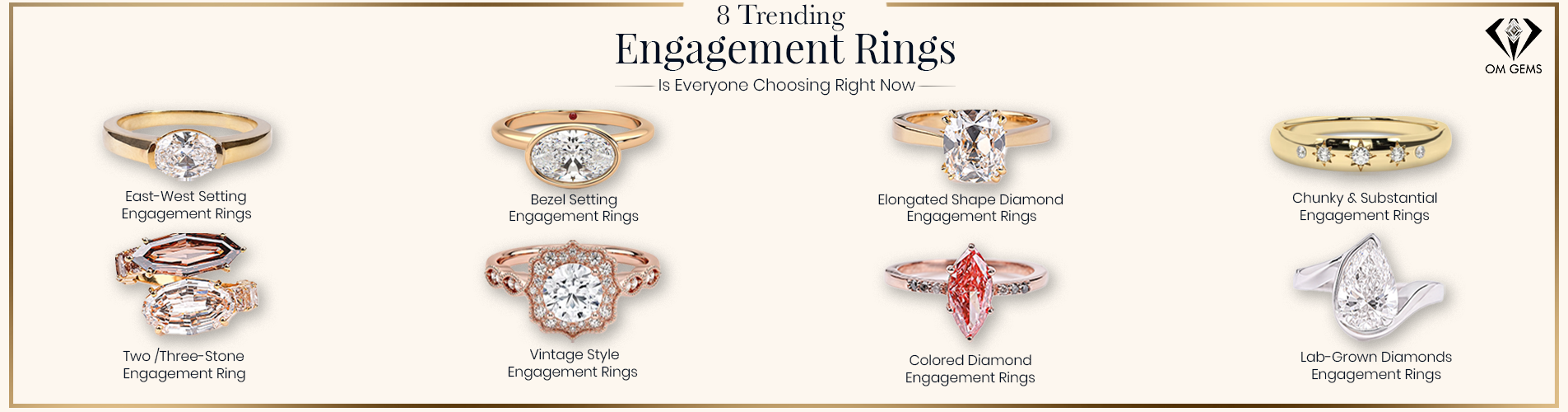
Vintage: This style contains various intricate details like milgrain, and filigree. It is inspired by old designs and has a romantic feel to it.
Toi et Moi: This style has two separate stones side-by-side in the same ring. This is a very different, modern style since it represents two separate individuals coming together as one.
Step 6: Choosing the Right Ring Setting
Prong Setting: A prong setting uses small metal claws to securely hold the diamond in place, allowing for maximum light exposure and creating an exceptional level of sparkle.
Bezel Setting: A bezel setting encircles the diamond with a thin rim of metal to completely protect it, giving it a modern and sleek appearance with exceptional durability.
Pavé Setting: The pavé setting consists of many small diamonds set very close together on the shank of the ring, forming a continuous line of sparkling gems, which creates an overall appearance that is luxurious and elegant.
Channel setting: The channel setting consists of diamonds set between two smooth band walls, providing a polished and secure look which is suitable for everyday wear.
Cathedral Setting: Cathedral settings utilize raised arches to elevate the centre diamond above the band, giving the ring height, elegance and a traditional, refined style.
Need more inspiration? Read our guide to engagement ring styles and settings to compare today's most popular designs.
Step 7: Choose the Right Metal
White Gold: A modern and sleek metal with a bright white finish that enhances the brilliance of a diamond and pairs beautifully with modern styles.
Yellow Gold: A classic metal with a rich and warm color. It is perfect for both traditional engagement ring designs and timeless designs.
Rose Gold: A softer shade of pink that is quite romantic and is perfect for vintage-inspired and feminine designs that are one-of-a-kind in nature.
Platinum: The highest quality metal on the market and is a naturally white metal that is known for its durability. It is extremely durable and can be worn every day without showing wear.
Sterling Silver (925 Silver): An affordable option with bright color and polish and is perfect for buying jewelry when on a budget. It does require regular maintenance to keep from tarnishing.
Step 8: Consider Lifestyle & Daily Wear
Choose engagement rings based on the kind of person you are and the kind of life you lead.
For those who live an active lifestyle, consider rings that are durable and do not catch on things such as a bezel setting or secure setting that protects the diamond from damage. For those who will only wear the ring at the office or occasionally, consider rings with more detail and a greater amount of sparkle.
Comfort is just as important, so make sure you wear the ring comfortably every day and that it does not catch or irritate you. By choosing to balance the features of style with the features of function, you will have a ring that is both beautiful and functional for a long time.
Step 9: Know The Ring Size
To ensure a comfortable fit, knowing the correct size is very important.
If you're trying to surprise her with a proposal, you can use one of her existing rings to get the right size (borrow it without her knowing) or trace the circle on the inside of the ring (using a pencil). You may also get help from her family/friends.
Another option is a jeweler. They'll have an idea on how to get the correct size without her knowing.
If the ring is not the exact size, don't worry, the ring can be resized but you should be close to the right size, because if you have to do a lot of resizing, it could change the way the ring looks and feels.
Step 10: Search for Certificate/Quality
Select a certified diamond to know that you will get a diamond that is both real and worth something. A certified diamond from a reputable grading lab (for instance, the Gemological Institute of America) will confirm the 4C’s of diamonds (cut, color, clarity, and carat weight) so you can be confident that the diamond you buy is authentic.
When purchasing a diamond, be sure to read the certificate carefully; check for any visible inclusions; and compare the specifications to the price. Lastly, verify that the jeweler you are buying from has a written return policy and offers a warranty on the diamond.
If you pay attention to certification and overall quality, you will have a secure purchase and will make an informed investment that is worth the money. Before purchasing, learn the differences between IGI and GIA certification and why grading reports matter.
Conclusion
Finding an engagement ring that meets your needs is not hard once you know the important things to consider. The most common elements used in engagement rings are price, diamond quality, and ring style, and setting. Take time to find the best engagement ring; compare several selections until you locate the perfect one. Consider lab created diamonds, they provide excellent quality and value in addition to being an environmentally friendly choice. By educating yourself, you will be capable of making an informed purchase of the perfect engagement ring from our entire collection of engagement rings that represent your relationship and personal style. Explore our Lab Grown Diamond Engagement Rings collection featuring timeless and modern designs for every style.
FAQs
1. How do I choose the right engagement ring?
Start by setting a budget, learning about diamond quality, choosing a diamond shape, and selecting a ring style and setting that matches your lifestyle and personal taste.
2. What is the most important factor when buying an engagement ring?
The diamond cut is often considered the most important factor because it affects the sparkle and overall brilliance of the diamond.
3. Are lab-grown diamonds good for engagement rings?
Yes, lab-grown diamonds are an excellent choice because they offer the same beauty, durability, and quality as natural diamonds at a more affordable price.
4. Which diamond shape is the most popular?
Round diamonds are the most popular engagement ring shape because of their timeless style and exceptional sparkle.
5. What ring setting is best for everyday wear?
Bezel and channel settings are great for everyday wear because they provide extra protection and durability for the diamond.
6. How much should I spend on an engagement ring?
There is no fixed rule. You should spend an amount that feels comfortable for your financial situation and priorities.
7. What metal is best for an engagement ring?
Platinum is highly durable and premium, while white gold, yellow gold, and rose gold are popular choices based on personal style and budget.
8. Why is diamond certification important?
Diamond certification verifies the diamond’s cut, color, clarity, and carat weight, helping buyers confirm the quality and authenticity of the stone.
9. Can engagement rings be resized?
Yes, most engagement rings can be resized by a jeweler if the fit is slightly too loose or too tight.
10. Which engagement ring style is best for a modern look?
Styles like Toi et Moi rings, hidden halos, east-west settings, and elongated diamond shapes are popular choices for a modern engagement ring look.