
The Ultimate Guide To Lab Grown Diamond
Demand is also growing for synthetic diamonds, as customers opt for ethical and sustainable diamonds. Increasingly, people are moving from natural diamonds to lab created diamonds instead. Many new customers are choosing lab diamonds as they are usually cheaper than natural diamonds and are considered more sustainable than natural, mined diamonds.
Furthermore, a lot of people are reluctant to buy natural diamonds as mining produces a considerable amount of carbon emissions. Here is a guide to lab created diamonds, how they are made, and a comparison between the two types, to help you make your choice.
What Is a lab-grown diamonds?
These Lab diamonds are refined and usable diamonds created in controlled laboratory environments instead of being formed naturally in the earth. Scientists have devised methods using advanced equipment to replicate the conditions under which diamonds form naturally, meaning that a real diamond can be generated above ground.
Lab-created gemstones are not imitations or fakes; they are just like "real" natural diamonds in terms of using the same chemical makeup, physical properties, and optical properties. Lab-grown diamonds have the same appearance, feel, and chemical composition as natural diamonds; therefore, they offer a viable option for today's buyer.
How Are Lab Diamonds Made?
Lab diamonds are made to mimic the natural diamond creation process in a laboratory setting. Sophisticated machines are used by scientists to grow diamonds from carbon, and they are mostly done using two methods-HPHT and CVD, which use their own methods of diamond growing.
HPHT:
This method replicates the process of how diamonds are formed deep inside the Earth. It uses extremely high temperatures and pressure to transform the carbon into a diamond. This method is one of the oldest methods and is usually used to make harder, larger diamonds, including ones for industrial purposes.
CVD:
The CVD method builds a lab-grown diamond from a gas-filled chamber, utilizing carbon-rich gases which are heated. The chemical reaction of the gases produces carbon atoms that will take time to accumulate in layers on a small lab-grown diamond seed. The CVD method is preferred when creating large, gem-quality diamonds that will be set in jewelry.
Read Our Detailed Blog About: How Are Lab Diamonds Made?
Lab Grown vs Natural Diamonds
Here’s a simple and beginner-friendly comparison table:
| Feature | Lab Grown Diamonds | Natural Diamonds |
|---|---|---|
| Origin | Grow in a controlled laboratory using advanced technology | Formed naturally inside the Earth over billions of years |
| Appearance | Looks identical to natural diamonds | Looks identical to lab made diamonds |
| Properties | Same physical, chemical, and optical properties | Same physical, chemical, and optical properties |
| Price | Usually 30–50% more affordable | Typically more expensive |
| Availability | Easily available in many sizes and qualities | Limited by natural supply |
| Environmental Impact | Generally lower impact (no mining) | Mining can affect land and ecosystems |
| Ethical Concerns | No mining-related ethical issues | May involve concerns depending on sourcing |
| Resale Value | Lower resale value | Higher resale value historically |
| Rarity | Not rare (can be produced) | Naturally rare |
| Best For | Budget-conscious and eco-aware buyers | Traditional and long-term value buyers |
Read our comparison of Lab-Created vs. Natural Diamonds to understand the key differences in value, appearance, and sustainability.
Advantages & Disadvantage Of Lab Grown Diamond
There are advantages and disadvantages to lab-grown diamonds that buyers should think about before they make their final choice.
The advantages of lab-grown diamonds include:
1. Cost savings so you can get a larger or higher quality diamond without spending too much.
2. The ethical sourcing of lab-grown diamonds eliminates the risk of dealing with mined conflict diamonds.
3. Lab-grown diamonds are generally much better for the environment because they reduce the need to mine for real diamonds.
The disadvantages of buying lab-created diamonds are as follows:
1. In most scenarios, particularly long-term, a lab-created diamond will be significantly cheaper when attempting to resell it compared to a mined diamond.
2. While a personal preference, some individuals will feel that a mined diamond is more special compared to the idea of a created diamond.
3. Because supply and production are increasing at an exponential rate, prices can fluctuate over time and cannot be assured at the rate they are currently priced.
Are Lab Grown Diamonds A Good Investment?
Most lab-grown diamonds tend to have less value in the resale market as compared to their natural counterparts. Since they can be created in laboratories, their availability can be adjusted by manufacturers, and this can play a significant role when selling them on a second-hand market. A person purchasing a lab-created diamond, therefore, stands to lose most of the initial sum spent on buying it if they later decide to resell.
Natural diamonds have always stood in a good position of value as a result of the scarcity and consistent demand that has always existed for them in the market. Since they take billions of years to form and can only be retrieved by mining the earth, they are viewed more as a fixed item and therefore stand in a stronger position to retain their value for a longer time.
It must also be borne in mind that the majority of people purchase diamonds to symbolize an emotional event like a marriage or proposal rather than for their investment value. The purchase of diamonds must center around one's personal sentiments, symbolism or rather an individual's own price bracket rather than investment.
Lab Created Diamonds Worth Value?
The resale prices of lab diamonds tend to be lower than those of natural diamonds because lab created diamonds can be produced in unlimited quantities and can have an effect on the value of the diamonds they produce. Therefore, when someone sells a lab grown diamond, they may not receive back what they originally valued at the time of the original sale.
Natural diamonds have typically maintained their value better because of their limited availability and the market demand that has existed for such a long time. Natural diamonds are formed over billions of years and are extracted from the Earth's crust, meaning that people often view them as having a certain amount of scarcity and heritage, creating long-term demand for resale.
Additionally, people typically purchase diamonds for sentimental reasons, such as during the engagement process or to celebrate important milestones, rather than for the ability to profit from their resale value. Therefore, when selecting a diamond for someone special, the buyer should determine what their preferences are (including sentimental value), what type of bond they share with that person, and what they can afford, but not what type of profit they will likely generate from the resale value of that diamond.
Lab Created Diamond Certification & Grading
Certificate of Lab Created Diamonds:
Certification is needed to verify your diamond's quality and its origins. The certificate will give you a trusted, objective & factual description of your diamond's individual properties so you can buy with confidence knowing exactly what you have purchased.
Diamond Certifying Laboratories
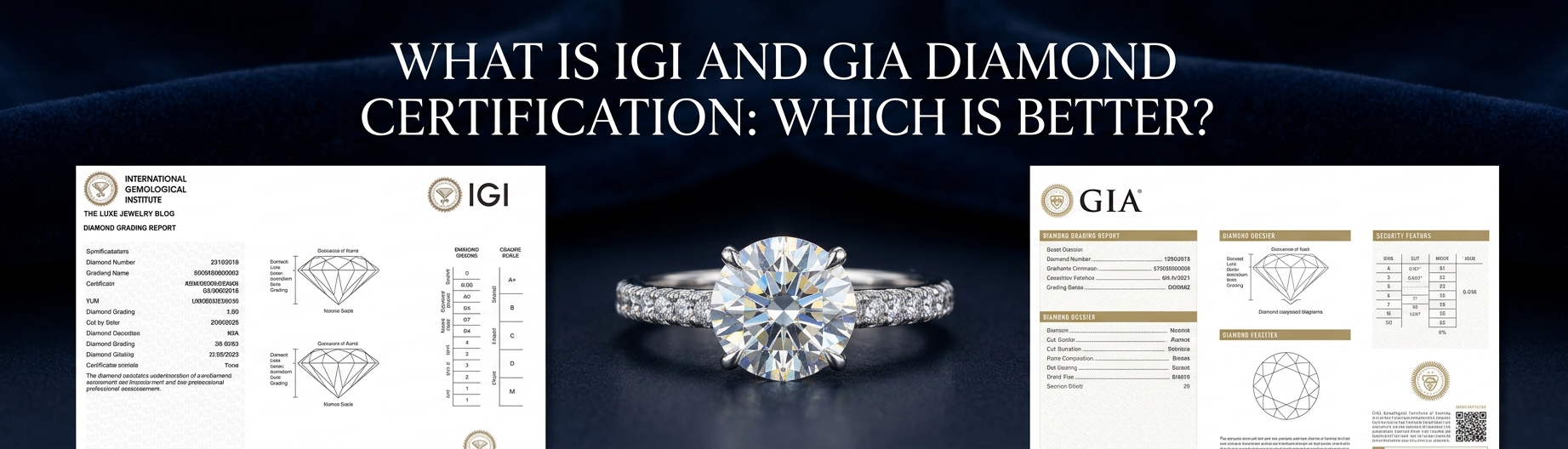
The leading diamond certifying laboratories are the IGI (International Gemological Institute) and the GIA (Gemological Institute of America). The IGI is responsible for the certification of most of the lab grown diamonds available on the market today. The GIA has had strict certification processes for decades and issues a comprehensive report for consumers of all types of diamonds, which helps with comparison. For batter understanding read What Is IGI And GIA Certification guide
Understanding the 4Cs:
The four elements of the diamonds are assessed on are: cut, color, clarity and carat. The brilliance/sparkle of a diamond depends on its cut. The color of a diamond is graded for how much (if any) color is present in the diamond, clarity deals with any imperfections inside the diamond, and Carat refers to its weight.
Learn More: Why the 4Cs Matter More Than You Think
Common Misconceptions Regarding Lab-Created Diamonds
First-time buyers of lab-created diamonds often get confused by the many misconceptions surrounding them. Knowing the facts about lab-created diamonds will allow you to be more informed and confident in your purchase.
1. They are not real diamonds
Lab created diamonds are true diamonds with the same physical, chemical and optical composition as natural diamonds. Simulants like cubic zirconia and moissanite look like diamonds, but they do not share the same properties.
2. They will not last a long time
Lab created diamonds are equally durable as natural diamonds. Both have a hardness equivalent to each other, allowing them to be worn daily for a lifetime when cared for properly
3. You can tell the difference between lab created and natural diamonds by simply looking at them.
Only trained gemologists can tell the difference between a lab created diamond from a natural diamond using special equipment; this will apply also to the majority of people purchasing lab created diamonds.4. Lab created diamonds are all low quality stones.
There is a wide range of clarity, cut, color and carat weight with lab created diamonds, just as there is with naturally grown diamonds; therefore, the determining factor of the value of lab created diamonds is not in their production method, but rather the same factors determine value as with a natural diamond.
Is a Lab-Grown Diamond the Right Choice for Engagement Rings?
While lab-grown diamonds may be a great option if you’re trying to stick within budget but want a quality stone, they can also appeal to individuals looking for an ethical source of diamonds that do not carry the negative environmental impacts associated with natural diamond production.
In addition to being good options for engagement rings, lab-grown diamonds are also excellent choices for everyday jewelry items such as pendant necklaces and earring studs, where durability and appearance play a large role in the decision, simply because both diamonds are equally durable as well as creates an option for other types of buyers in terms of physical activity and taste/style preferences!
Explore our collection of Lab Grown Diamond Engagement Rings featuring IGI-certified diamonds in a variety of shapes and settings.
Conclusion
Lab grown diamonds are truly real diamonds; they offer you a price-friendly alternative, while also proving to be the more responsible choice compared to diamonds mined from the earth. They retain the same level of brilliance, hardness, and durability as the diamonds you find naturally mined from the ground, a favorite for modern shoppers. By knowing how they are priced, your decision may not be that difficult after all. At the end of the day, it is all a matter of what makes you comfortable and works for you and your lifestyle, budget and long-term expectations.
Explore our collection of high-quality and budget-friendly Lab Grown Diamonds designed for create fine jewelry.
FAQs
1. Are lab-grown diamonds real diamonds?
Yes, lab-grown diamonds are real diamonds with the same chemical, physical, and optical properties as natural diamonds.
2. Can you tell the difference between lab-grown and natural diamonds?
No, most people cannot tell the difference with the naked eye. Only trained gemologists using specialized equipment can identify them.
3. Are lab-grown diamonds cheaper than natural diamonds?
Yes, lab-grown diamonds are usually 30–50% more affordable than natural diamonds of similar quality.
4. Do lab-grown diamonds last forever?
Yes, lab-grown diamonds are just as durable as natural diamonds and can last a lifetime with proper care.
5. Are lab-grown diamonds environmentally friendly?
Lab-grown diamonds are generally considered more sustainable because they avoid mining and often produce lower environmental impact.
6. Do lab-grown diamonds have resale value?
Yes, but their resale value is typically lower than natural diamonds due to increasing production and availability.
7. Are lab-grown diamonds certified?
Yes, many lab-grown diamonds are certified by trusted laboratories such as IGI and GIA.
8. What are the 4Cs of diamonds?
The 4Cs stand for cut, color, clarity, and carat, which are used to evaluate a diamond’s quality and value.
9. Are lab-grown diamonds good for engagement rings?
Yes, lab-grown diamonds are a popular choice for engagement rings because they offer excellent quality, durability, and affordability.+
10. Is a lab-grown diamond better than moissanite?
Lab-grown diamonds are real diamonds, while moissanite is a different gemstone. The better choice depends on your budget, sparkle preference, and long-term expectations.