

How Are Lab Diamonds Made?
In recent times, lab-grown diamonds are getting more publicity, because society has become more interested in finding both affordable and ethically made alternatives to the naturally grown mined stones. Due to its increasing popularity, many beginners became interested in how a diamond of immense value can be made in a lab.
Here's the elaboration in simple terms, showing what technology is involved in making lab grown diamonds and how.
What Are Lab Grown Diamonds?
Lab grown diamonds are also real diamonds. The difference between them is that instead of being made under the ground through nature's slow but fascinating process, they are instead made under carefully controlled laboratory conditions. Scientific experts utilize modern technological practices to imitate the conditions required to create diamonds, the primary element used being carbon.
Similar to natural diamonds, they exhibit precisely the same chemical, optical and physical properties, making them completely indistinguishable in looks and function and meaning you cannot confuse them for the simulants like cubic zirconia and moissanite.
Read our detailed guide: The Ultimate Guide to Lab Grown Diamonds
Summary of the Lab Diamond creation process
Lab diamonds are actually manufactured by reproducing the same environmental factors that were responsible for their formation deep within the Earth. However, instead of waiting millions or billions of years for this process to take place, scientists use machines to replicate conditions so that the process can happen in a relatively short amount of time. Essentially, they want to get the carbon that makes up diamonds to form into a crystal exactly like that which makes up natural diamonds.
There are two primary methods used to create lab diamonds: HPHT (High Pressure High Temperature) and CVD (Chemical Vapor Deposition).
Understanding the HPHT Method (High Pressure High Temperature)
HPHT stands for High Pressure High Temperature. The HPHT method is one of the first and most common methods used to grow lab diamonds synthetically by replicating the natural growing process of the gems.
This process is an attempt to replicate the process that naturally occurs deep inside the Earth. High pressure, as well as high temperature, is utilized to convert carbon to a diamond crystal structure, just like naturally occurring diamonds do, but at an expedited pace.
How it Works:
To perform the HPHT method, a tiny diamond seed is used and placed into a chamber with carbon material. Then, a machine that produces extreme heat and high pressure creates the correct growing conditions. As the conditions become more suitable for diamond creation, the carbon melts and crystallizes around the diamond seed. This process can continue for weeks or even months until a substantial diamond is created.
Characteristics of HPHT Diamonds
HPHT diamonds are suitable for a wide range of industrial applications because of their durability, and also produce brilliant gem-quality stones suitable for jewelry:
Explain the CVD Method (Chemical Vapor Deposition)
CVD stands for Chemical Vapor Deposition. CVD is one of the modern, highly used methods to grow lab diamonds, resulting in top-quality gems where precision in the growing process can be achieved.
It grows diamonds in layers, using carbon-enriched gases. The process is popular for growing jewelry-grade diamonds due to the greater control over clarity and the resulting quality during the growing process.
How the Process Works
A small diamond seed is placed in a vacuum-sealed chamber. This chamber is then introduced to a carbon-enriched gas that is then heated up, breaking it down into it's base components. It is the carbon atoms that bind slowly to the seed, growing the diamond layer by layer.
Characteristics of CVD diamonds
CVD diamonds have exceptional clarity and consistency in their growth; therefore, the growing process allows for careful control, making it suitable for gem-quality stones used in fine jewelry.
Discover stunning Lab Diamond Engagement Rings showcasing exceptional clarity and brilliance made possible through advanced CVD diamond-growing technology.
A step-by-step breakdown of how diamonds are formed in a laboratory:
From carbon to diamond: The process is quite straightforward and follows a process of careful steps to grow a real diamond.
Step 1: Placing the diamond seed
The lab diamond growth starts by taking a diamond seed (a small fragment of another diamond).
Step 2: Method selection (HPHT or CVD)
The type of diamond being created dictates whether the High Pressure High Temperature method or the CVD (Chemical Vapor Deposition) method is chosen.
Step 3: Introducing pressure or gas
The diamond seed is introduced into a machine where it is subjected to either tremendous pressure or is exposed to a flow of carbon-rich gas.
Step 4: Crystal formation over days or weeks
Over several days or weeks, carbon is gradually deposited onto the seed molecule, allowing the crystal to grow layer by layer.
Step 5: Cooling and extraction of rough diamond
When growth is sufficient, the newly formed diamond is allowed to cool and extracted.
The cutting and finishing of lab diamonds
After growing in the lab, the lab diamond exists as a rough stone. It then has to be cut and finished in order to make it fit for jewelry. The same methods are used to cut rough diamonds, which include the same processes as natural diamonds, to ensure the best shape and finish of the stone.
The diamond then undergoes a polishing process that makes it glitter and shine. This will maximize the reflection of light that occurs within the stone. Lastly, it is then faceted into traditional shapes, including round, princess, oval or cushion to make it suitable for rings and other such items.
Inspection and grading procedures for a lab-grown diamond
Following the creation of a lab diamond, a thorough examination process is performed. It involves inspecting each diamond for clarity, color and internal structure to confirm the quality and required look of each diamond before its use in jewelry.
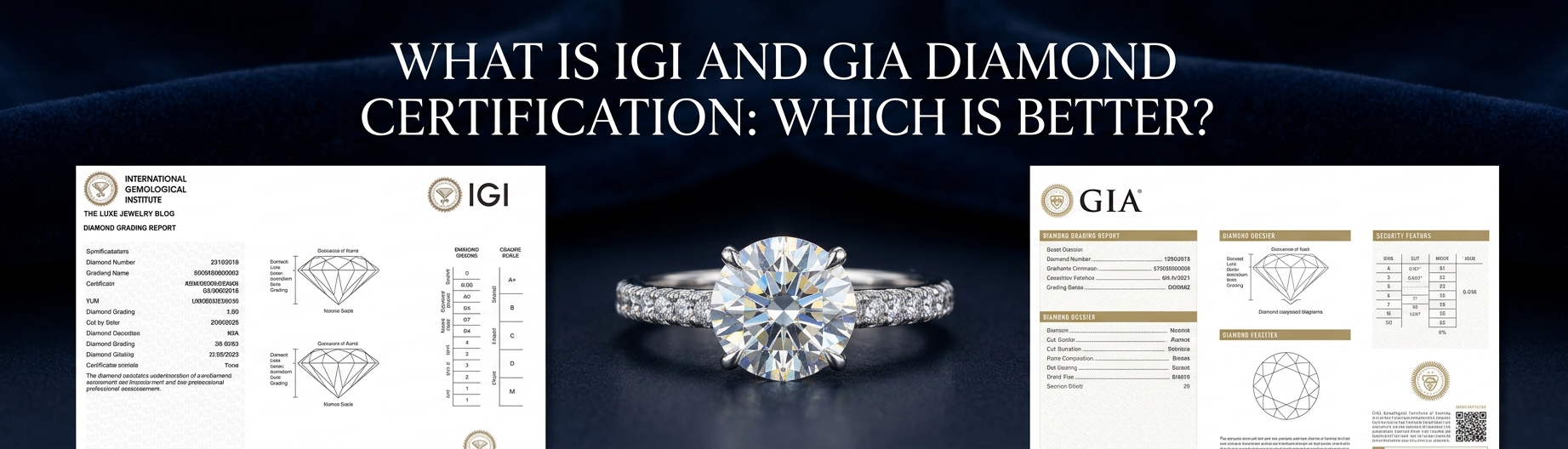
The lab-grown diamond must also be graded by accredited gemological laboratories such as GIA and IGI. These certificates attest that the diamond is man-made and also include specific grading details. The grading will use the 4Cs of a diamond - Cut, Color, Clarity and Carat.
Learn more about diamond grading standards in our guide to What is IGI And GIA Lab Grown Diamond Certification.
Lab-Grown vs. Natural Diamond Formation
Natural diamonds: They are produced deep within the earth over millions of years by means of intense heat and pressure, and then erupt to the surface with volcanic activity. Once on the surface, they are mined.
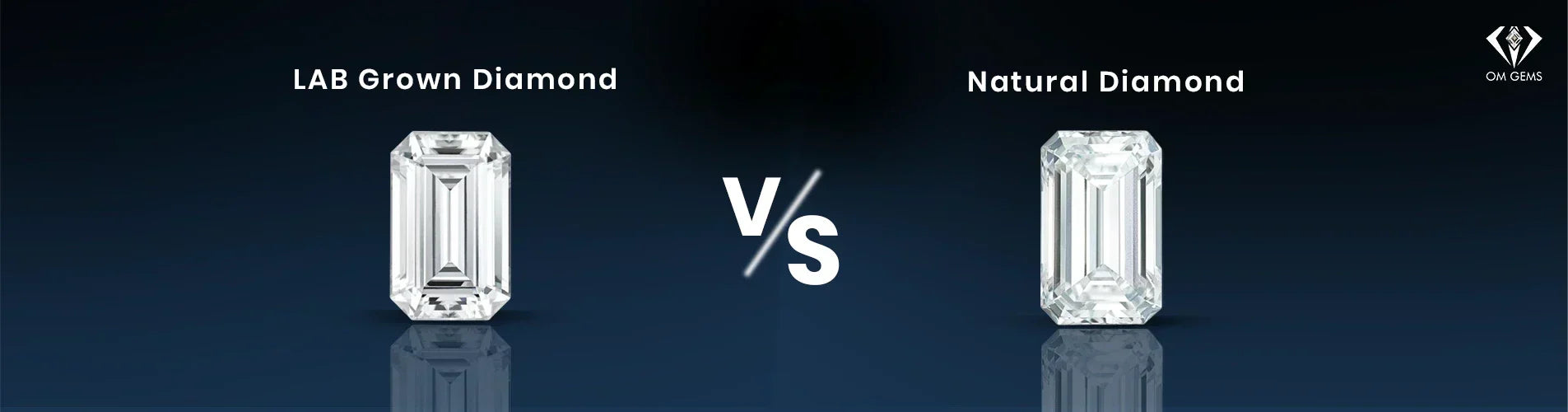
Lab diamonds: These are made in a lab using new and sophisticated technology, which replicates the same conditions used deep within the earth. The process of creating a lab diamond usually only takes a couple of weeks, not millions of years. The outcomes are still the same, though; lab and natural diamonds appear, structurally and visually, identically, having the same properties and shine.
Lab vs. Natural Diamonds - Creation process:
Natural diamonds have been forming within the Earth for billions of years, deep within the planet, exposed to enormous heat and pressure. Once they surface from the Earth, typically as a result of a volcanic eruption, they are then mined.
Lab diamonds are manufactured in laboratories using up-to-date technology, simulating and mimicking the natural conditions deep within the Earth. This process takes weeks rather than billions of years, and once the stone is made, the finished product is visually and structurally the same, a dazzling, bright, natural stone with the same characteristics.
Technology, Safety and Innovation in the production of diamonds
High-tech machines are used in the formation of lab grown diamonds that meticulously regulate conditions such as temperature, pressure, or gas flow, depending on the method employed. This regulated process replicates the process that occurs in nature, but is significantly shortened without compromising quality or uniformity.
These processes are conducted within the protected confines of laboratory environments designed for stability and accuracy at every stage. The ongoing innovation in technology employed is increasing the efficiency with which diamonds are formed, producing greater clarity, uniformity and quality, with methods continually becoming more sophisticated.
Common Myths About How Lab Diamonds Are Produced
Many misunderstand the process involved in the creation of lab diamonds and question the nature of the diamonds. Disputing the myths associated with lab diamonds, this section elaborates on how lab diamonds are produced.
They are artificial or fake
Lab diamonds are not artificial or fake. They are real diamonds that have identical physical, chemical, and optical properties as natural diamonds. The difference is that these diamonds are grown in a laboratory rather than within the Earth.
They are made instantly
A lab diamond is not created in minutes. In reality, it can take several days or even weeks for the carbon atoms to develop into a crystal structure around the original seed of diamond.
The process is easy
Producing lab diamonds requires advanced machines, as well as controlling a variety of gases, temperatures or pressure. It is therefore not an easy procedure.
All lab diamonds are inferior
The quality of lab diamonds is diverse, just like natural diamonds. Value is based on cut, color, clarity and carats.
Learn how lab diamonds are made and why they offer exceptional value compared to mined diamonds.
To better understand the lab diamond process read How Are Lab Diamonds Made? Guide
Conclusion
Lab-grown diamonds are manufactured by technology that produces diamonds under the same circumstances as they are produced naturally. This reduces the time to grow diamonds from billions of years to mere weeks, allowing diamonds to be grown on a manufactured setting in an environment and at a time when it is economical to do so.
Two different methods HPHT and CVD are used for creating these diamonds, and while each one uses different methods to grow real diamonds from carbon, the knowledge that the diamonds are manufactured by an appropriate technology will allow the consumer to consider them as real, manufactured diamonds. With knowledge, purchasing decisions can be more confident and based on personal circumstances and requirements.
FAQs
1. How are lab diamonds made?
Lab diamonds are created using advanced technology that replicates the natural diamond-growing process through HPHT or CVD methods.2. What does HPHT stand for?
HPHT stands for High Pressure High Temperature, a process that mimics the extreme heat and pressure found deep within the Earth.
3. What is the CVD diamond growing method?
CVD stands for Chemical Vapor Deposition, where carbon-rich gas is used to grow a diamond layer by layer inside a chamber.
4. How long does it take to grow a lab diamond?
Depending on the method and size, it can take several days to a few weeks to grow a lab diamond.
5. Can you tell the difference between lab-grown and natural diamonds?
No, visually they look identical. Only specialized equipment used by gemologists can identify the difference.
6. Are lab-grown diamonds durable?
Yes, lab-grown diamonds are just as hard and durable as natural diamonds, making them suitable for everyday wear.
7. Are lab diamonds certified?
Yes, lab-grown diamonds are graded and certified by trusted organizations like GIA and IGI.
8. Are lab-grown diamonds environmentally friendly?
Lab-grown diamonds are generally considered more eco-friendly because they avoid large-scale mining and often have a lower environmental impact.
9. Which is better, HPHT or CVD diamonds?
Both methods produce real diamonds. HPHT is often used for durable industrial diamonds, while CVD is preferred for high-quality jewelry diamonds with excellent clarity.