
Article: Lab-Created Vs. Natural Diamonds: Which One Should You Choose
Lab-Created Vs. Natural Diamonds: Which One Should You Choose
Throughout history, diamonds have represented the ideals of love, devotion, and extravagance; nevertheless, a contemporary dilemma now faces today’s consumers: the decision between a lab-created diamond and a naturally mined diamond. As technological advancements occur and consumers continue to redefine their needs, selecting a diamond has become much more than about aesthetic brilliance; it is also a question of economic worth, moral ethics, and personal long-term investment potential.
This detailed guide to selecting a diamond will provide a full understanding of both your engagement ring or gift, and help you determine whether the selected diamond will serve as an adequate long-term investment opportunity.
Defining a Lab-Created Diamond and a Natural Diamond
Natural Diamonds: A natural diamond is formed in the earth’s atmospheric interior, through geological pressure and high temperatures, over the last 3.3 billion years (the age of the oldest natural diamonds). Over an extended period through mining and processing, they can be produced as finished diamond products.
Lab Created Diamonds: A lab-created diamond can be produced in one of two ways, either by using the High-Pressure High-Temperature (HPHT) process or the Chemical Vapour Deposition (CVD) process. In a lab-invented method, diamonds are made with a combination of carbon, heat, and energy; however, the entire process takes approximately four to six weeks, compared to the billions of years for a natural diamond. Learn more about lab diamonds read our The Ultimate Guide To Lab Grown Diamond Guide.
Lab-Grown vs Natural Diamonds: 7 Key Differences
1. Source (The Only True Difference)
Natural Diamonds Formed for millions of years underground in the Earth. Lab-diamonds Created in weeks in laboratory using advanced technology.This difference in origin dictates everything else (price, perception and value).
2. Look and Quality
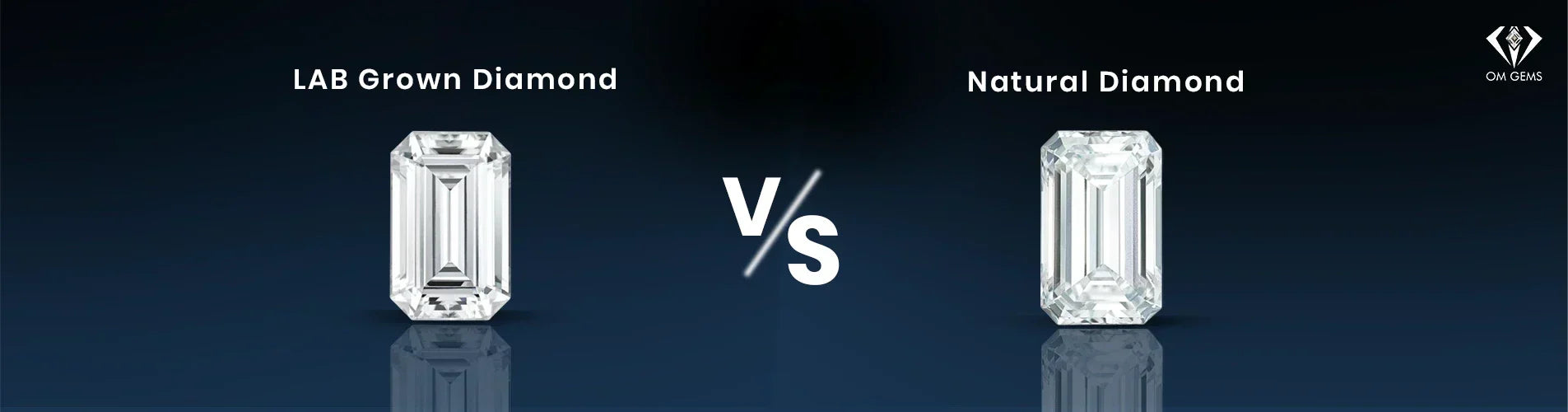
There is no differential appearance between lab-created diamond and a natural diamond.
Both diamonds have,
- Same brilliance (brilliance and fire).
- Same hardness (10 on the Mohs hardness scale).
- Same (4Cs) grading system for cut, color, clarity, and carat weight.
3. Price difference (Major Factor)
This is the “wow” factor. Synthetic stones (lab-grown diamonds) generally cost between 60%-90% less than equivalent natural stones.
Example (1 carat) - High Quality:
- Synthetic Diamond: $300-$1200
- Natural Diamond: $7000-$11500
So, what does this all mean?
- Either buy a bigger or better diamond while staying within your initial spending limit.
- Or reduce the overall price of your purchase.
4. Resale & Value
Value Percentage
- Natural diamonds ≈ 40% - 60% of value
- Lab diamonds ≈ 10% - 20% of value
Why?
- Natural diamonds – rare & supply-controlled
- Lab diamonds – created today are created tomorrow
If resale or investment matters, natural diamonds are a better choice.
5. Ethics And Sustainability
Lab diamonds:
- create without mining.
- more transparency in the supply chain, considered more ethical.
Natural diamonds:
- negative impact of mining on the environment and communities.
- There are brands with an ethical sourcing standard.
6. Emotion & Rarity
- Psychology plays an important role in this aspect.
Natural Diamonds
- Billions of years old
- A symbol of rarity, along with the traditions associated with it
- Often thought of as family heirloom items
Lab Diamonds
- A modern innovation and practical, smart choice
- More emphasis on value and design
Pros and Cons Of Lab Vs. Natural Diamonds
Lab Created Diamonds Pros:
-
Cost 60% to 90% less than Natural Diamonds
-
Bigger than Natural Diamonds for the same cost
-
Ethically sourced and Eco-friendly
-
Same beauty and strength as Natural Diamonds
Lab Created Diamonds Cons:
-
Rescale value is lower than Natural Diamonds
-
Not considered as rare as Natural Diamonds
-
Prices are dropping consistently
Natural Diamonds Pros:
-
Natural Diamonds are Rare & Timeless
-
Sell for more than Lab Created Diamonds
-
Have an emotional appeal and a traditional feel
-
Make for a great legacy in the long term
Natural Diamonds Cons:
-
More expensive than Lab Created Diamonds
-
Ethical issues (depends on where they are sourced from)
-
Natural Diamonds are much smaller than Lab Created Diamonds for the same budget
Diamond Buying Guidelines
1. First, Pay Attention to the Cut
The shine of a well-cut diamond (more than size) surpasses the shine of a poorly cut diamond (larger).
2. Always Verify Certification
GIA will certify for Natural Diamonds, while IGI and GCAL will certify lab-created diamonds. To better understand diamond grading reports by read IGI And GIA Diamond Certification Guide.
3. Do Not Pay Too Much for Carat Weight
For example, paying $4,000,000 for a 0.90 CT excellent cut diamond is much better than paying $7,050.00 to $8,500.00 for a 1.2 CT poor cut diamond.
4. Compare Prices on Similar Diamonds to Find the Best Price
They are diamonds that look the same but will sell at different prices depending on the cut/clarity/carat.
There Is No Better Diamond
Both natural and lab-created diamonds are sold as separate products for differing reasons.
- Lab-created = smart luxury
- Natural stone = emotional luxury
- Both types of diamonds are genuine.
- Both types of diamonds have beauty.
- Both have a place for the expression of love.
Explore our curated collection of Lab Grown Diamond Rings, Lab Diamond Earrings, and Lab Diamond Pendants designed for every style and occasion.
Conclusion
When it comes to selecting a diamond, the choice between lab-created and natural diamonds is now a personal one based upon your value system. When it comes to price-to-value, there is no competition between lab-created diamonds and natural diamonds. Lab-created diamonds have the most sparkle for your money! If you're more concerned with acquiring something rare, that has a long history, and can be passed down through generations, then natural diamonds will still have value. Ultimately, the best diamond for you is the one that aligns with your values. Discover Fine Lab-Grown Diamond Jewelry at OM Gems.

