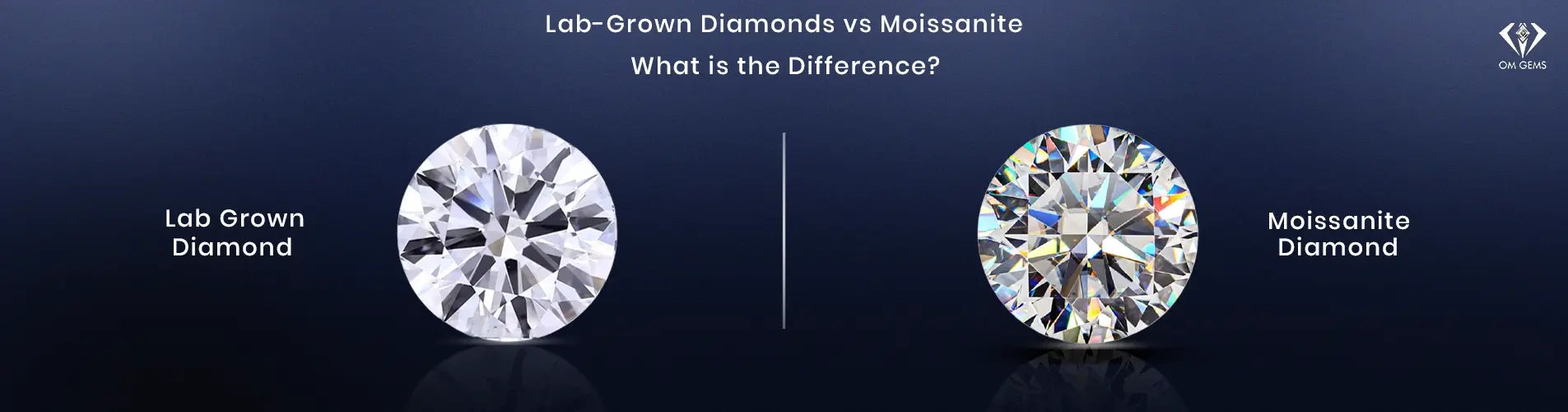
Round
Round
 Radiant
 Emerald
 Oval
Oval
 Pear
Pear
 Cushion
 Princess
 Heart
Heart
 Asscher
 Alphabet
 Trillion
 Half Moon
 Baguette
 Dutch Marquise
 Trapezoid
 Portuguese
 Blue
Blue
 Red
Red
 Pink
Pink
 Grey
Grey
 Champagne
 Yellow
 Green
Green
 Orange
 Brown
Brown
 Black
Black
 Solitaire
 Halo
Halo
 Hidden Halo
 Unique
 Diamond Band
 Bezel
Bezel
 Cluster
 Three Stone
 Dainty
 Vintage
 Wedding Bands
 Eternity Bands
 Anniversary Bands
 Pavé Diamond Bands
 Matching Bridal Sets
 Curved bands
 Five Stone Bands
 Seven Stone Bands
 Nine Stone Bands
 Stackable Bands
 Custom bands
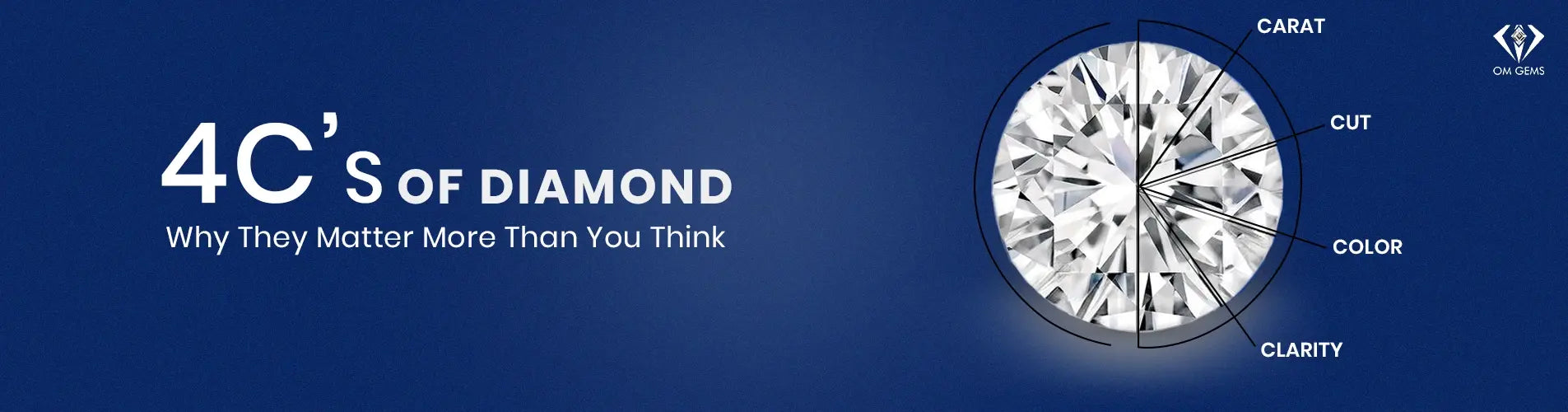
4C's Of Diamonds: Why They Matter More Than You Think
When making your first purchase of a diamond, you will likely find all of the different terminology and price ranges to be an overwhelming task. This is why there are four factors used to classify diamonds (the "4C's"): the Cut of the diamond, the Color of the diamond, the Clarity of the diamond, and the Carat (weight) of the diamond.
These four attributes have been developed by organizations such as the GIA (Gemological Institute of America), which are reliable resources for all things pertaining to diamonds. This grading system provides a common language when discussing the quality of diamonds and will enable you to shop wisely and make accurate comparisons between different diamonds, while also avoiding being overcharged.
By using the 4C's as a guide to buying a diamond, you can do your shopping intelligently with assurance that you are not paying more than you should for the product.
Diamond Carat

Carat is a measure of weight for diamonds; it does not reflect how large the diamond will appear when set in your ring. There is an often-repeated saying that a diamond's size (in carats) will determine its apparent size when worn but this is not necessarily true.
In fact, two factors are most responsible for the apparent size of the diamond: cut quality and shape. An oval seems to be larger than a round diamond with equal carat weight, and another very well cut may appear smaller than one very poorly cut, even if it has more carat weight.
One good way to save money is by buying slightly lower weights than what you want, i.e., 0.90 CT instead of 1.00 CT will get you a stone almost equal in value but much cheaper because of the carat weight difference. The carat is what you are really paying for—the cut is what you will see.
Diamond Cut:

The diamond cut and shape are not the same thing. Diamond cut is often considered the most important of the 4Cs because it has the greatest impact on a diamond's brilliance, sparkle, and overall beauty. Unlike shape, which refers to a diamond's outline, cut measures how well a diamond's facets interact with light. A well-cut diamond reflects light efficiently, creating exceptional brightness and fire, while a poorly cut diamond may appear dull even if it has high color and clarity grades.
- Excellent Cut: Delivers maximum brilliance, fire, and sparkle through outstanding light performance. Considered the highest cut grade.
- Very Good Cut: Reflects most of the light that enters the diamond, offering excellent sparkle and appearance at a slightly lower price.
- Good Cut: Provides good light reflection and visual appeal, making it a balanced option between quality and value.
- Fair Cut: Allows some light to escape from the sides or bottom, resulting in less brilliance and sparkle.
- Poor Cut: Reflects minimal light and often appears dull or lifeless due to weak light performance and proportions.
To see how different cuts and shapes affect a diamond's appearance read our the most common diamond shapes guide and find the style that best suits your preferences.
Diamond Color

A diamond's color grade measures how much color is present in the stone, with less color generally being more valuable. The industry-standard color scale ranges from D to Z, with each grade representing a different level of color visibility. Understanding the diamond color chart helps buyers choose the right balance between appearance and budget.
- D–F (Colorless): These diamonds contain virtually no color and appear exceptionally white and bright. They are the rarest and most valuable color grades.
- G–J (Near Colorless): These diamonds appear colorless to most people, especially when set in jewelry. They offer an excellent balance of beauty and value.
- K–M (Faint Color): A slight yellow or brown tint may be visible, particularly in larger diamonds. The color is subtle but more noticeable than in higher grades.
- N–R (Very Light Color): These diamonds display a visible yellow or brown tint that can often be seen without magnification, affecting their overall appearance.
- S–Z (Light Color): Diamonds in this range have a noticeable yellow or brown hue. While they are lower on the color scale, some buyers appreciate their warmer appearance and affordability.
Diamond Clarity

Diamond clarity refers to the presence of internal characteristics (inclusions) and external marks (blemishes) that form naturally during a diamond's creation. The clarity scale helps buyers understand how clean a diamond appears and how visible these imperfections are under 10x magnification. While higher clarity grades are rarer and more valuable, many inclusions are too small to be seen with the naked eye.
- FL (Flawless): No inclusions or blemishes visible under 10x magnification. Extremely rare and highly valued.
- IF (Internally Flawless): No internal inclusions visible under 10x magnification, with only minor surface blemishes present.
- VVS1–VVS2 (Very, Very Slightly Included): Tiny inclusions that are extremely difficult for trained graders to detect under magnification.
- VS1–VS2 (Very Slightly Included): Minor inclusions visible under 10x magnification but usually invisible to the naked eye.
- SI1–SI2 (Slightly Included): Noticeable inclusions under magnification and sometimes visible without magnification, depending on size and location.
- I1–I3 (Included): Obvious inclusions that may be visible to the naked eye and can affect the diamond's appearance and durability.
The 5th C: Certification
Certification acts as a quality guarantee for your diamond. It confirms each of the four main factors: cut, color, clarity, and carat through an objective grading report. Well-known entities such as the Gemological Institute of America (GIA), International Gemological Institute (IGI), and Gem Certification & Assurance Lab (GCAL) are the ones maintaining uniformity and honesty in the market.
If you ignore the certification, there is a chance that you may be paying more than necessary or buying a diamond whose quality has been falsely presented. Consider it this way: acquiring a diamond without certification is similar to purchasing a car without the necessary papers. You don't really know what you are getting.
To better understand diamond grading reports, learn the differences between IGI and GIA certification and how they impact your buying decision.
Conclusion
Actually, a perfect diamond does not simply mean getting the highest grading with all four Cs. One must first realize what really affects a diamond's beauty and then find the parts that one may sacrifice without giving in to one's appearance. Once you realize how cut color, clarity, and carat complement one another, you will be less confused and more confident. Also, you will not be merely guessing but making a wise and educated choice. Ultimately, the best diamond is not the most expensive one but the one that visually pleases you and that you feel is fitting for your story. Explore high-quality and affordable lab grown diamonds at OM Gems.
1. What are the 4Cs of diamonds?
The 4Cs stand for Cut, Color, Clarity, and Carat, which are the universal standards used to evaluate a diamond’s quality and value. These factors help buyers compare diamonds and make informed purchasing decisions.
2. Which of the 4Cs is most important?
Cut is considered the most important because it directly affects how much a diamond sparkles. Even a diamond with high color and clarity can look dull if the cut is poor.
3. How many C’s are in a diamond?
There are 4 main C’s in a diamond: Cut, Color, Clarity, and Carat.
4. What are the 4Cs in marketing?
The 4Cs in marketing refer to Customer, Cost, Convenience, and Communication.
5. What are the 5 C’s for diamonds?
The 5th C is Certification, It ensures the diamond’s quality is verified by a trusted grading authority.
6. What is the best diamond color for value?
The best value is typically found in the G–H color range, as these diamonds appear nearly colorless to the naked eye but cost significantly less than D–F grades.
7. What does “eye-clean” mean in diamond clarity?
An “eye-clean” diamond has no visible inclusions or imperfections when viewed without magnification. This is the ideal choice for balancing beauty and budget.
8. Is a higher carat diamond always better?
Not necessarily. Carat refers to weight, not visual size. A well-cut, smaller diamond can appear larger and more brilliant than a bigger, poorly cut one.
9. How can I save money when buying a diamond?
You can save money by:
-
Choosing G–H color instead of D–F
-
Selecting VS2–SI1 clarity
-
Opting for 0.90 ct instead of 1.00 ct
-
Prioritizing cut over everything else
10. What is the difference between diamond cut and shape?
Cut refers to how well the diamond is crafted (affecting sparkle), while shape refers to its form, such as round, oval, or emerald.
11. Are lab-grown diamonds graded using the 4Cs?
Yes, lab-grown diamonds are graded using the same 4Cs system as natural diamonds, making it easy to compare quality across both types.
12. Why is diamond certification important?
Certification ensures that a diamond’s quality has been independently verified. Without it, you risk overpaying or buying a lower-quality stone than advertised.
13. What is the best combination of the 4Cs for a budget-friendly diamond?
A smart combination is:
-
Cut: Excellent
-
Color: G–I
-
Clarity: VS2–SI1
-
Carat: Based on budget
This balance provides maximum sparkle and value without unnecessary cost.